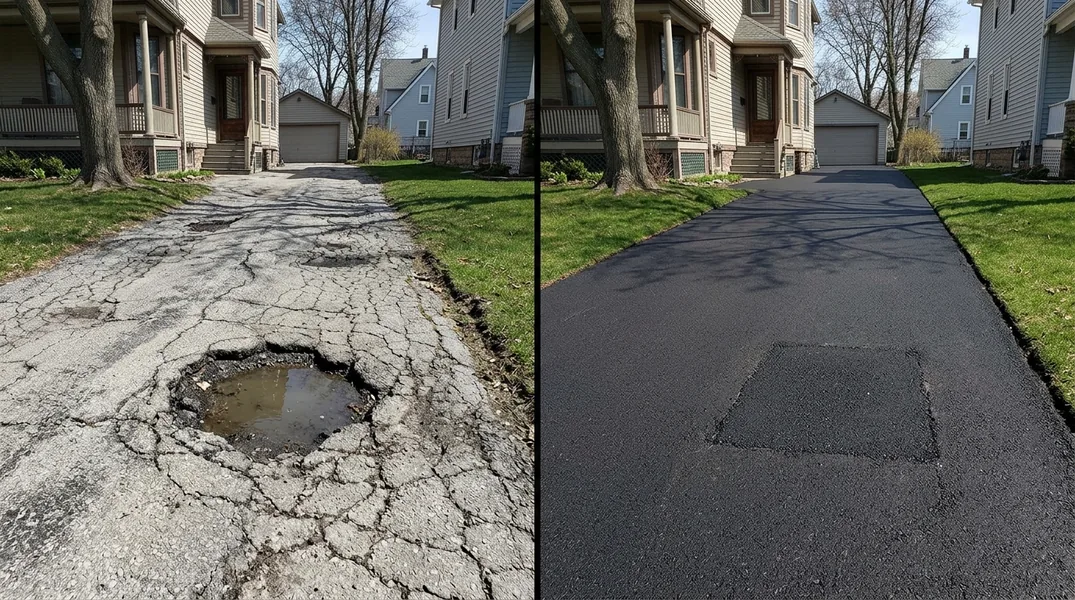
Understanding Drainage Problems in Cheektowaga and West Seneca Post-War Homes
Homes built in the post-war era across Cheektowaga and West Seneca share a common challenge: aging driveways with inadequate drainage systems. These neighborhoods experienced rapid residential development from the late 1940s through the 1960s, and many of the original asphalt surfaces were installed with minimal consideration for long-term water management. Today, homeowners in these communities frequently encounter water pooling on driveways after heavy rain or spring snowmelt, a problem that accelerates pavement deterioration and creates safety hazards.
The root cause often stems from the original grading and base preparation used decades ago. Post-war construction prioritized speed and cost efficiency over sophisticated drainage design. As the region's climate continues to challenge these aging surfaces with freeze-thaw cycles and heavy precipitation, the need for modern driveway drainage solutions has become urgent. Water that pools on your driveway doesn't simply sit there; it seeps into the asphalt base, weakens the subgrade, and eventually causes cracking, settling, and structural failure. Understanding this problem is the first step toward protecting your property investment.
Why Water Pooling Damages Your Driveway
When water accumulates on your driveway surface, it's not merely a cosmetic issue. The asphalt itself is porous at the microscopic level, and standing water infiltrates the layers beneath the surface. Over time, this moisture weakens the base materials and the soil underneath, causing the driveway to settle unevenly. In Buffalo's climate, where winter temperatures drop well below freezing, this problem intensifies dramatically. Water trapped in the asphalt and base expands when it freezes, creating internal pressure that fractures the pavement from within. This freeze-thaw cycle repeats dozens of times each winter, turning minor pooling issues into major structural problems within just a few years.
Beyond structural damage, standing water creates safety concerns for your family and guests. Pools of water hide potholes and uneven surfaces, increasing the risk of trips and falls. In winter, these areas become slippery and dangerous. Additionally, water pooling indicates that your driveway is not properly graded, meaning the entire surface may be settling or shifting. This can affect how water drains from your home's foundation as well, potentially leading to basement moisture problems. The longer you allow water to pool on your driveway, the more expensive the eventual repairs will be. Early intervention with proper drainage solutions protects your investment and maintains your property's safety and curb appeal.
Driveway French Drain Systems: A Modern Solution for Post-War Properties
A driveway french drain is one of the most effective solutions for managing water on residential driveways. This system works by installing a perforated pipe beneath or adjacent to your driveway surface, surrounded by gravel and filter fabric. The pipe collects water that would otherwise pool on the surface and channels it away from your property toward a designated drainage area or storm drain. For homeowners in Cheektowaga and West Seneca, French drains are particularly valuable because they address the core problem that post-war construction left unsolved: proper subsurface water management.
The installation of a French drain system typically begins with careful site assessment to determine the best placement and slope. The drain must be positioned to intercept water before it accumulates on your driveway surface. Buffalo Asphalt Paving professionals evaluate your property's natural grade, soil composition, and existing drainage patterns to design a system tailored to your specific situation. Once installed, a French drain works continuously and requires minimal maintenance, making it an excellent long-term investment for homeowners tired of dealing with pooling water year after year.
Trench Drain Driveways: When You Need Industrial-Strength Drainage
For properties with severe water accumulation problems or those situated in low-lying areas, a trench drain driveway may be the ideal solution. Unlike a French drain, which operates beneath the surface, a trench drain features a visible channel or grate across your driveway that captures water directly at the surface and directs it underground. This system is particularly effective for driveways that experience significant runoff from neighboring properties or steep slopes. Trench drains are commonly used in commercial and industrial settings, but they're increasingly popular among residential homeowners in the Buffalo area who want a dependable, high-capacity drainage system.
The advantage of a trench drain is its immediate, visible performance. You can see water being captured and removed, which provides peace of mind during heavy storms. Modern trench drain systems are designed to integrate seamlessly with your driveway's appearance, with grates available in various styles and finishes. During Asphalt Driveway Paving & Installation projects, Buffalo Asphalt Paving can incorporate a trench drain system that complements your new pavement while solving your drainage challenges. The system requires periodic cleaning to ensure debris doesn't clog the grates, but this maintenance is straightforward and far less costly than dealing with water damage to your driveway and foundation.
Asphalt Driveway Paving & Installation Cost in Buffalo: Budgeting for Drainage Solutions
The pricing for driveway drainage solutions varies based on the system type, your driveway's size, and site conditions. A basic French drain system for a standard residential driveway typically ranges from $1,500 to $4,000, depending on the length of the drain needed and soil conditions. Trench drain systems generally cost more, ranging from $3,000 to $8,000 or higher for larger properties. When combined with Asphalt Driveway Paving & Installation, you may benefit from economies of scale, as the contractor can coordinate drainage installation with the paving work, reducing overall labor costs.
It's important to view drainage installation as an investment in preventing future damage rather than simply an added expense. Ignoring water pooling problems often leads to the need for Driveway Repair or even complete replacement within a few years, which costs significantly more. Many homeowners in Cheektowaga and West Seneca find that installing proper drainage when they have their driveway paved or resurfaced is the most cost-effective approach. Buffalo Asphalt Paving provides detailed estimates that break down all costs associated with your specific drainage needs. To understand what your project will cost, contact us at (716) 303-0919 or request a free estimate online.
Getting Started: Asphalt Driveway Drainage Solutions Near You
If you're experiencing water pooling on your driveway, the first step is a professional evaluation. Buffalo Asphalt Paving serves homeowners throughout the Buffalo area, including Cheektowaga and West Seneca, with expertise in diagnosing drainage problems and recommending appropriate solutions. Our team will assess your property's grading, soil conditions, and water flow patterns to determine whether a French drain, trench drain, or alternative solution is best for your situation. We'll explain the options clearly, discuss the benefits and costs of each approach, and help you make an informed decision.
Don't let water pooling damage your driveway and threaten your home's foundation. Modern drainage solutions are proven, reliable, and increasingly affordable when combined with paving or Asphalt Resurfacing & Overlay projects. Contact Buffalo Asphalt Paving today at (716) 303-0919 to schedule your free estimate. Our professionals are ready to help you protect your property with a drainage system designed for Buffalo's challenging climate and your home's unique needs.
Looking for a professional asphalt paving contractor in Buffalo? Buffalo Asphalt Paving responds fast for all your asphalt paving needs.
Get a Free Quote