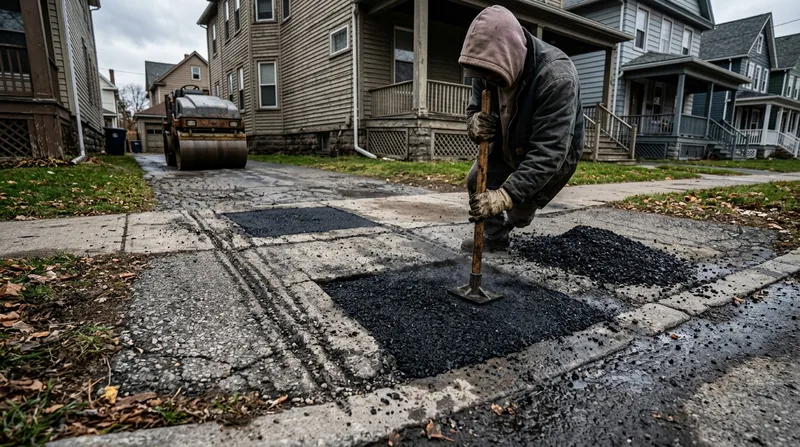




Freeze-thaw cycles off Lake Erie crack and heave driveways across Buffalo every winter. We patch alligator cracking, fill settled low spots, and reset edges torn up by months of plow blades. Buffalo's oldest neighborhoods, from the Victorian doubles of the city core to the post-war suburbs stretching across Cheektowaga, West Seneca, and Tonawanda Town, all sit on the same heavy lake-plain clay that holds water against the base and holds cold once it freezes. The result is uneven heaving and settling rather than simple wear, and when a driveway repair in Buffalo is needed, the damage is often deeper than it looks. We measure what's failed, estimate the cost to patch or resurface, and tell you plainly whether repair makes sense or whether a full replacement is the better investment.
Why Driveway Repair Matters in Buffalo's Lake-Plain Climate
Buffalo's winters bring repeated freeze-thaw crossings and months of hard, frequent plowing. The lake-effect snow off Lake Erie, heaviest in November and December, means your driveway is not just cracking from age, it is being actively torn apart by the seasonal cycle. Water seeps into small cracks, freezes, expands, and breaks the asphalt from inside. Plow blades catch the edges of aprons and side drives, especially on the narrow lots of older neighborhoods, and tear away chunks of surface. Settled low spots collect meltwater and keep it there, accelerating deterioration. A crack that looks minor in July becomes a pothole by March.
- Alligator cracking (a spider web of fine cracks over a section) signals that the base below the asphalt is beginning to fail.
- Potholes and edge damage appear suddenly after a hard freeze or a heavy plowing season.
- Low spots that hold water accelerate cracking and shorten the life of the entire driveway.
- Settling and heaving along seams or at the apron create trip hazards and drainage problems.
Catching these repairs early keeps the cost down. Ignoring them turns a patch into a resurfacing job, and a resurfacing into a replacement.
Key info: Buffalo's lake-plain clay and repeated freeze-thaw cycles are the reason driveway repair is not optional here. A crack that sits all winter in Buffalo will be twice as bad by spring. Early repair saves money and prevents the base from failing.
The City of Buffalo and the villages across Erie and Niagara counties all have rules about driveway aprons, culverts, and curb cuts, and some require permits before repair work begins. Before you call, check with your local building department to understand what applies to your property. For more information on Buffalo's building codes and permitting, visit the City of Buffalo website.
How We Repair Driveways in Buffalo: From Assessment to Finish
Every driveway repair starts with a real look at what failed and why. We measure the cracks, check the base, and test whether patching will hold or whether the damage runs too deep. A small pothole or a settled section can be filled and leveled. Extensive alligator cracking or a soft base means the asphalt has lost its bond, and patching will fail within a season. In that case, we recommend resurfacing or replacement and explain the cost of each option so you can decide.
- We arrive on site with measuring tape and a visual assessment of the cracks, potholes, and settled areas.
- We explain what we see, why it happened, and whether repair, resurfacing, or replacement is the right choice.
- For pothole and crack repairs, we remove the failed asphalt, prep the base, and fill with hot mix asphalt compacted to density.
- For settled sections, we mill out the low spot and overlay it level with the rest of the drive.
- We pitch the surface to shed meltwater and compact all edges to prevent new damage from plow blades.
The whole process, from estimate to drive-on finish, takes one day for most repairs. Large jobs or extensive patching may take two.
Local example: A Williamsville homeowner with a pothole near the apron and alligator cracking in the middle section called in May. We patched the pothole and filled the low spot, but the alligator cracking told us the base was compromised. We recommended a full resurfacing. She chose the patch first, and it held through the summer. The next winter, the cracking spread. A resurfacing the first time would have cost less than two separate jobs. That is the math we lay out on the estimate.
For a detailed look at the options when a driveway is more damaged, see our page on asphalt resurfacing and overlay.
| Repair Type | What It Is | Best For |
|---|---|---|
| Pothole Patching | Remove failed asphalt, prep the base, fill with hot mix, compact to density. | Single potholes or isolated damage from freeze-thaw or plowing. |
| Full-Depth Patching | Remove asphalt down to subgrade, rebuild the base, and fill with new asphalt. | Potholes that go through the base or settled sections where the subgrade has failed. |
| Crack Filling | Clean the crack and fill with a specialized material to stop water infiltration. | Single linear cracks or small spider-web patterns that have not yet compromised the base. |
| Edge Reset and Leveling | Remove torn or settled edges, rebuild the base, and overlay level with the rest of the surface. | Aprons and side drives damaged by plow blades, or settled sections along the perimeter. |
Driveway Repair Cost in Buffalo: What to Expect
Driveway repair in Buffalo starts at around $450 for a single pothole or a small cracked section, and climbs from there based on the size of the damaged area, the depth of the failure, and how much base preparation is needed. A pothole that only affects the top layer of asphalt costs less than one that has broken through to the subgrade. Alligator cracking over a large section or multiple settled areas will run higher because more material and labor are involved. The best way to know the cost for your driveway is to get it measured on site.
Most homeowners should plan for one of three scenarios. A single pothole or crack runs $450 to $800. Multiple potholes or a patch covering 10 to 20 percent of the surface runs $800 to $2,000. Extensive damage covering more than 30 to 40 percent of the driveway means the base is likely compromised, and patching will not hold. In that case, resurfacing (an overlay of new asphalt over the existing surface) or full replacement is the honest recommendation, and both cost more than patching. We explain the math on the estimate so you can decide whether to repair now and plan for resurfacing later, or to go straight to resurfacing and avoid a second repair bill.
For a full breakdown of pricing across all our services, visit our pricing page. Call us at (716) 303-0919 for a free, no-obligation estimate.
What to Look for When Hiring a Driveway Repair Contractor Near Buffalo
The biggest risk in driveway repair is hiring a traveling crew that shows up at your door with an unsolicited offer and a price that is too good to be true. The classic pitch is "we have leftover asphalt from a job nearby, and we can do yours today for cash." That is a scam. A real contractor has a local address, local plates, and a written estimate with the tonnage and thickness of asphalt on it. They ask questions about your driveway, not just the price. They give you time to think and check references.
Here is what to verify before you hire any contractor, including us:
- Ask whether the contractor is fully insured and request a certificate of insurance naming you as an additional insured.
- Check your local building department to see whether a permit is required for driveway repair in your jurisdiction, and whether the contractor will help you navigate it.
- Get at least two estimates in writing, with the tonnage of asphalt and the thickness of the patch or overlay clearly stated.
- Call references from past jobs in your neighborhood, not just names the contractor gives you.
- Verify that the contractor is local and has a physical address you can visit if something goes wrong.
- Never pay a large cash deposit upfront or sign a contract without a detailed scope of work.
If you are in a homeowners association, check whether HOA approval is required before you start work. Some associations have rules about driveway materials or extensions. Buffalo's villages and the city itself also have rules about aprons, curb cuts, and stormwater, so a quick call to your building department is always worth the time. We help homeowners navigate local permitting and can answer questions about what your municipality requires. Contact us to discuss your driveway and get a free estimate.
Driveway Repair in Buffalo: Pricing Guide
| Service | Price | Details |
|---|---|---|
| Single pothole or small crack | Starting at $450 | Includes removal, base prep, and hot mix fill, compacted to density and finished level |
| Multiple potholes or patch up to 20 sq ft | Starting at $800 | Size of damaged area, depth of failure, and base condition determine final cost within this range |
| Extensive patching or full-depth repair | On estimate | Damage over 30 to 40 percent of surface or compromised base requires on-site assessment before pricing |
| Travel and site visit | Included | No mileage fee or travel charge within Buffalo and surrounding Erie and Niagara county service areas |
| Free estimate | No obligation | Written estimate with tonnage and thickness, response within 24 hours at (716) 303-0919 |
Indicative pricing, the exact cost depends on square footage, finish, and site access. Free personalized estimate within 24h at (716) 303-0919.


