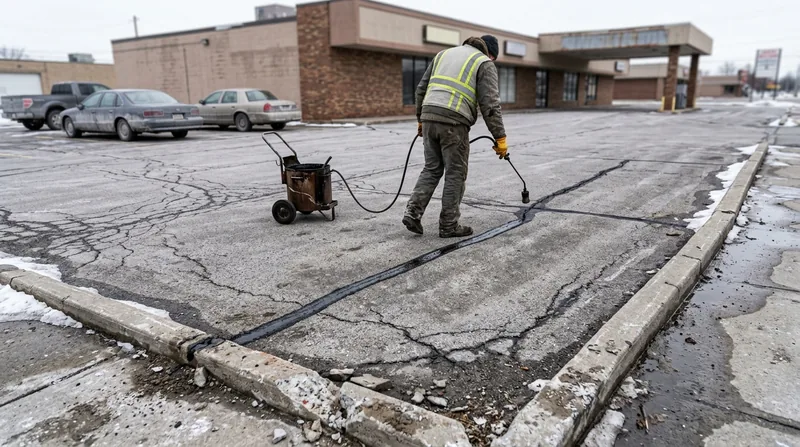




Parking Lot Repair & Resurfacing in Buffalo starts with understanding why this region's lots fail so fast. Buffalo sits on lake-plain clay that shifts and settles unevenly beneath the asphalt base, especially when freeze-thaw cycles grip the ground from November through March. Salt spray from winter plowing, repeated heavy truck traffic, and the weight of snow and ice all accelerate cracking and rutting. A parking lot that sheds water cleanly one year can develop alligator cracking and soft spots the next if the base has moved. We patch those cracks, reseal against salt damage, and restripe so your lot holds through another hard plowing season without the cost of a full replacement.
Why Parking Lot Repair Matters in Buffalo's Freeze-Thaw Climate
Buffalo's lake-effect winters and clay subsoil create a specific failure pattern that concrete or asphalt lots cannot ignore. The ground heaves as it freezes, pushing up against the base layer and creating stress points where cracks begin. Then meltwater pools in those cracks, refreezes, and widens them further. By spring, a lot that was sound in October has developed spider-web cracking across thirty to forty percent of its surface. Parking lot repair now costs far less than waiting for the base to fail entirely, which forces a full replacement.
- Alligator cracking signals base movement and requires patching or resurfacing before it spreads.
- Potholes and ruts collect meltwater and accelerate deterioration around the damaged zone.
- Salt exposure weakens asphalt binder and causes surface spalling and edge breakup.
- Settling and heaving create trip hazards and drainage problems that liability insurance notices.
- Restriping worn or faded lines keeps the lot functional and code-compliant for ADA and fire lanes.
Early repair keeps your lot safe, maintains drainage, and extends the life of the underlying base.
Key info: A parking lot in Cheektowaga or West Seneca that shows alligator cracking over twenty to thirty percent of the surface is a candidate for resurfacing, not patching. Patching throws money away on a lot where the base is already compromised. We assess the damage on site and recommend the approach that protects your investment.
For details on local permitting and stormwater rules for parking lot work, check with the City of Buffalo Department of Permits and Inspections or your municipality's building department, as impervious-surface limits and drainage requirements vary across Erie and Niagara counties.
How We Repair and Resurface Parking Lots in Buffalo
Parking lot repair and resurfacing follows a clear sequence. We start with a site visit to measure the lot, identify the type and extent of damage, and probe the base to understand what we are working with. From there, we propose a repair strategy that matches the damage. For isolated potholes and alligator cracking, we remove the failed asphalt, clean and tack the edges, and fill with hot-mix asphalt compacted in lifts. For lots with widespread cracking or rutting, we recommend a resurfacing overlay, which mills off the top layer, cleans the remaining base, and lays new asphalt on top. Full-depth replacement is reserved for lots where the base has failed or settled beyond repair.
- We measure the lot and document the failure pattern, including photographs and tonnage estimates.
- We remove failed asphalt and debris, then proof-roll the base to confirm it is stable.
- We tack the edges and surrounding surfaces with hot asphalt cement to bond the new material.
- We lay hot-mix asphalt in one or two lifts, depending on the depth required, and compact each pass.
- We restripe fire lanes, parking spaces, directional arrows, and handicap zones to code.
- We provide written tonnage specifications and a completion timeline before we start.
The result is a lot that sheds water, resists salt damage, and holds up through the next five to eight years of Buffalo winters.
Example: A small office parking lot in Lackawanna with pothole damage in four locations and alligator cracking across the eastern section received a half-inch overlay after we removed the failed zones and stabilized the base. The lot was back in service the next day, and the owner avoided a full replacement that would have cost three times as much.
For more on how resurfacing compares to full replacement, see our page on Asphalt Resurfacing & Overlay.
Parking Lot Repair Methods and When to Use Each
| Approach | Description | Best for |
|---|---|---|
| Pothole and Crack Patching | Remove failed asphalt, clean the cavity, tack the edges, and fill with compacted hot-mix asphalt. | Isolated damage affecting less than fifteen to twenty percent of the lot surface. |
| Resurfacing Overlay | Mill the top half-inch to one inch of failed asphalt, clean and tack the base, and lay new hot-mix in one or two lifts. | Alligator cracking and rutting across twenty to forty percent of the surface, with a stable base underneath. |
| Full-Depth Replacement | Remove all existing asphalt and base, regrade and stabilize the subgrade, build a new aggregate base, and lay new asphalt. | Base failure, extensive settling, or when a lot has reached the end of its service life. |
| Milling and Recycling | Mill the existing asphalt and haul it away for recycling, or reuse it as a base layer under new asphalt. | Reducing disposal costs and using reclaimed material to build the new base layer. |
| Restriping and Seal Repair | Repaint parking spaces, fire lanes, directional arrows, and handicap symbols to current code standards. | Worn or faded markings that affect safety, liability, and ADA compliance. |
The choice of method depends on the extent of damage, the age and condition of the base, and your budget. We recommend patching for isolated failures, resurfacing for widespread surface cracking with a sound base, and full replacement only when the base has failed or the lot is beyond economic repair.
Parking Lot Repair and Resurfacing Cost in Buffalo: What to Expect
The cost of parking lot repair and resurfacing in Buffalo depends on the size of the lot, the type and extent of damage, and the method used. Pothole patching starts at around $650 for a small job and scales with the number of potholes and the size of each cavity. Resurfacing a small to mid-size lot, say 5,000 to 10,000 square feet, typically runs from $2,500 to $5,000, depending on the depth of the overlay and the condition of the base. Full-depth replacement is more expensive and requires an on-site estimate because it involves removing and disposing of the old asphalt, regrading the subgrade, and building a new base.
Several factors move the cost up or down. A lot with soft or unstable base material requires more preparation work and thicker new asphalt. Lots with poor drainage need grading changes to shed water properly. Limited access for equipment, tight turnarounds, or the need to keep the lot partially open during work all add time and labor. Salt damage and rust staining may require power washing before patching or overlay. And if your lot is in a village or municipality with strict stormwater rules, you may need to install or upgrade drainage features, which adds cost.
The best way to understand the cost for your lot is to get a free, no-obligation estimate from us. We visit the site, measure, document the damage, and propose a repair strategy with a written price and tonnage specification. We also help you understand permitting if your municipality requires it. Call us at (716) 303-0919 or visit our pricing page for more detail on what different scales of work cost in the Buffalo area.
Parking Lot Repair and Resurfacing Near Me: What to Look for When Hiring a Contractor in Buffalo
Hiring the right parking lot contractor is critical because the work is visible, affects safety and liability, and carries a significant price tag. Start by verifying that any contractor you interview is fully insured and carries general liability and workers compensation coverage. Ask to see a certificate of insurance naming your business as an additional insured. Ask for references from recent parking lot work in Buffalo, Cheektowaga, West Seneca, or nearby towns, and call them to ask about the quality of the work, the timeline, and whether the contractor cleaned up and finished on schedule.
Get written estimates from at least two or three contractors. A good estimate includes the size of the lot in square feet, the method proposed (patching, resurfacing, or replacement), the depth and tonnage of new asphalt, and a clear price. Be wary of estimates that are vague about the method or that propose patching when resurfacing is the honest call. Ask about the timeline and whether the contractor can work around your business hours or keep the lot partially open. Understand that parking lot work requires permits in most Buffalo municipalities, and check with your local building department to confirm what applies to your lot.
If your lot is in an HOA or a master-planned community, verify that the asphalt color and finish meet the architectural standards. Some HOAs require specific aggregate types or seal finishes, and your contractor should be familiar with those rules before you sign a contract. Finally, avoid any contractor who shows up unsolicited, offers a price that seems too good to be true, asks for a large cash deposit upfront, or refuses to provide a written contract. These are the classic warning signs of a paving scam.
Ready to get started? Contact Buffalo Asphalt Paving for a free estimate and to discuss your parking lot repair or resurfacing project. We are local, fully insured, and have been serving Buffalo and surrounding areas since 2010.
Parking Lot Repair & Resurfacing in Buffalo: Pricing Guide
| Service | Price | Details |
|---|---|---|
| Pothole and Crack Patching | Starting at $650 | Small isolated potholes and cracks, single or multiple locations, labor and compacted hot-mix asphalt included |
| Resurfacing Overlay (Small Lot) | Starting at $2,500 | Half-inch to one-inch overlay on five thousand to ten thousand square feet, includes milling, tacking, new asphalt, and restriping |
| Resurfacing Overlay (Large Lot) | Starting at $5,000 | Ten thousand to twenty thousand square feet or larger, depth and tonnage determined by site assessment and base condition |
| Full-Depth Replacement | On estimate | Complete removal, subgrade regrading, new base and asphalt layers, requires on-site measurement and base assessment |
| Restriping and Seal Repair | Starting at $350 | Repainting parking spaces, fire lanes, directional arrows, and handicap symbols to current ADA and local code standards |
| Free Estimate and Site Visit | No charge | Response within twenty four hours, written proposal with tonnage specs and timeline, no obligation to book |
Indicative pricing, the exact cost depends on square footage, finish, and site access. Free personalized estimate within 24h at (716) 303-0919.


